Category: Blog

Your blog category

  • THE POWER OF TEAMWORK: WHAT ‘KID INVENTORS’ TEACHES ABOUT COLLABORATION

    THE POWER OF TEAMWORK: WHAT ‘KID INVENTORS’ TEACHES ABOUT COLLABORATION

    What happens when imagination meets collaboration?

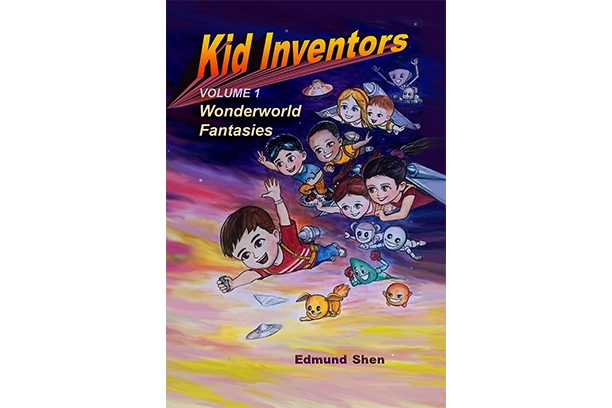
    In Kid Inventors, the educational comic series by Edmund Shen, the author has focused on teamwork as the engine that drives every wild idea, hilarious failure, and triumphant breakthrough. Through witty storytelling and real-world STEM inspiration, this series shows young readers that no great invention is ever built alone.

    At a time when problem-solving and collaboration are top priorities in education, Kid Inventors delivers a powerful message: innovation grows faster when kids work together.

    Every Inventor Needs a Team

    Sure, Eddy is full of big ideas. But even he can’t build a drone, a smart robot, and an invisibility suit by himself.

    That’s where Dotty, Jenny, Coddy, Webby, Intty, and a few unexpected mentors from the book come in. Each character brings their own strength:

    • Dotty adds heart, fun, and creative chaos.
    • Coddy cleans up tech glitches and translates theory into code.
    • Webby connects the team with materials and sponsors.
    • Intty makes sure inventions look good (and make sense).
    • Jenny rallies the community, runs promotions, and keeps the team visible.

    They’re not super-geniuses. They’re not rich. They don’t always get along. But when they combine their skills, something magical happens.

    Learning from Each Other’s Mistakes

    Inventions fail all the time in Kid Inventors. But instead of falling apart, the team picks each other up and moves forward.

    • When the radar-based Easter treasure detector malfunctions, they learn why checking your tools (and the size of what you’re picking up!) matters.
    • When Webby introduced Mr. Unbeatable to Eddy, the group came together to brainstorm ways to make it even better.
    • When Smaro, Eddy’s robot, starts acting up, Coddy and Jenny help debug the system together.

    The message is simple: failure isn’t the end. It’s just part of the process. And collaboration makes recovering from it a lot easier.

    STEM Isn’t a Solo Sport

    What’s especially clever about the Kid Inventors series is how it integrates real science into everyday teamwork.

    Each project taps into STEM concepts, from AI and radar systems to smart fabrics and nano-robots. But instead of presenting these topics through lectures or textbooks, Shen shows them in action—on the playground, in the kitchen, and in the school’s robotics lab.

    And crucially, each invention requires multiple perspectives to work:

    • Building an invisibility cloak? Coddy handles the physics, Eddy designs the application, and Intty thinks about the style.
    • Creating a robot toothbrush? Webby ensures it’s safe, Dotty tests it (accidentally, of course), and everyone learns a lesson about user instructions.

    This approach helps kids see that science isn’t just for a chosen few; it’s a team effort with space for coders, creatives, leaders, and learners.

    From Comic Strip to Classroom Model

    The teamwork in Kid Inventors is a blueprint for how kids in the real world can work together to tackle complex problems.

    The series encourages:

    • Collaborative thinking: Different minds see different solutions.
    • Respect for each role: Every contribution matters, even if it’s behind the scenes.
    • Shared wins and failures: Success feels better when it’s earned together. And failure feels lighter when it’s shared and together we can learn from our mistakes.

    With group science projects and team-based learning being central to education, this comic series is a fun, effective reminder that collaboration is essential.

    Why It Matters

    The future of STEM doesn’t belong to lone geniuses. It belongs to teams who know how to listen, support, and build together.

    Kid Inventors teaches this lesson without preaching. Through laughter, missteps, and big dreams, it shows kids how to:

    • Work with others, even when it’s messy.
    • Share credit and responsibility.
    • Think bigger than one brain ever could.

    If we want to raise the next generation of creators, dreamers, and problem-solvers, we need to show them what’s possible when people work together.

    Kid Inventors does exactly that. In doing so, it shares a powerful message: the belief that every kid has something to contribute.

    Grab your copy today.
  • STEM Education Through Storytelling: How ‘Kid Inventors’ Makes Science Fun

    STEM Education Through Storytelling: How ‘Kid Inventors’ Makes Science Fun

    What if learning science felt more like an adventure than a lecture?
    In Kid Inventors, the vibrant comic series by Edmund Shen, readers are whisked into a world where everyday kids explore extraordinary ideas, and science is always part of the ride. But this isn’t your typical textbook-style learning. It’s curiosity in action, where big questions lead to even bigger discoveries.
    The magic? It’s all rooted in real STEM.

    Imagination Meets Innovation

    Kid Inventors is a celebration of possibility. The inventions are playful, unexpected, and sometimes chaotic but built on real scientific ideas. Concepts like artificial intelligence, memory storage, electromagnetic waves, and smart materials are incorporated into the story in a fun and informative way.
    Readers won’t feel like they’re sitting in science class. Instead, they’ll experience what happens when trial and error lead to breakthrough moments. The kids in the series don’t always get things right the first time, and that’s the point: learning is a process, and failure is part of innovation.

    Science in Disguise

    One of the standout features of the series is how it sneaks science into the most unexpected places. Whether it’s something wearable, something that flies, or something that thinks for itself, each invention reflects real-world technology or scientific theory.
    The comics often include subtle explanations, mentor advice, or clever side notes that unpack the “how” behind the “wow.” It’s a gentle introduction to everything from robotics and AI to environmental science and engineering, without ever feeling like homework.

    A Story That Feels Personal

    Unlike many stories that feature prodigies or superheroes, the kids in Kid Inventors are relatable. They don’t have superpowers or endless resources. What they do have is curiosity, creativity, and a willingness to learn. That’s what makes the science feel achievable.
    Readers are encouraged to think like inventors: to ask questions, explore ideas, and work with what they have. There’s also a strong emphasis on collaboration, because even the best ideas grow stronger with teamwork.

    Why It Matters

    In a world where STEM is becoming more essential by the day, Kid Inventors empowers young minds to dream big, tinker often, and see mistakes not as failures but stepping stones.
    The series isn’t just about gadgets—it’s about the mindset behind them. And that’s a lesson every future innovator can take to heart.
    For educators, parents, or curious kids looking for inspiration, Kid Inventors is more than a comic. It’s a launchpad for scientific thinking—and a reminder that the next great invention might just begin with a wild idea and a little imagination.

  • HOW ‘KID INVENTORS’ INSPIRES YOUNG MINDS TO THINK LIKE INNOVATORS

    HOW ‘KID INVENTORS’ INSPIRES YOUNG MINDS TO THINK LIKE INNOVATORS

    How can you spark curiosity and creativity in your child’s mind?

    While children are naturally curious, nurturing that curiosity requires intention. You need to help your kids think outside the box, ask questions, and explore new ideas. Kid Inventors, the comic series by Edmund Shen, brings all these elements together in a clever, energetic format designed to ignite a love for science, technology, and problem-solving in young readers.

    Kid Inventors offers something rare: a story-driven, accessible, and educational introduction to innovation through the lens of ordinary kids with extraordinary ideas.

    Normal Kids. Big Ideas. Real Challenges.

    Unlike many “genius kid” stories, Kid Inventors doesn’t focus on prodigies. The main characters, Eddy, Dotty, Jenny, and their classmates, are regular children with big imaginations and limited resources. They face obstacles: lack of money, missing skills, failed prototypes, and skeptical adults.

    What sets them apart is their mindset. They keep trying. They learn by doing. They support each other through mistakes and setbacks.

    The result? A compelling model of how young minds grow into innovators with persistence rather than perfection.

    Turning Failure into Fuel

    One of the standout elements of Kid Inventors is how it reframes failure. Whether it’s an AI robot that misfires, a drone that won’t fly, or a candy invention that tastes like… everything at once, the kids’ missteps become key learning moments.

    Each comic strip includes:

    • Hints and mentor tips explaining the science or engineering concepts behind the scenes
    • Hands-on thinking that mimics real-world trial and error
    • Creative problem-solving that evolves with every attempt

    In other words, the series teaches that innovation isn’t a straight line—it’s a messy, hilarious, and often frustrating process. And that’s exactly what makes it inspiring.

    STEM Concepts Hidden in Comic Panels

    The stories incorporate real technical topics like electromagnetic waves, AI, robotics, radar systems, and smart fabrics without overwhelming young readers. The author has incorporated scientific concepts through jokes, failures, and team challenges.

    This isn’t just science fiction. It’s a science with a foundation in reality—packaged in a way kids enjoy.

    Why It Works

    Kid Inventors taps into a proven formula for building innovation mindsets in children:

    • Relatable characters who mirror real kids in personality and skill level
    • Story-based learning that holds attention and builds emotional engagement
    • Emphasis on teamwork, showing how collaboration leads to better ideas
    • Exposure to STEM, without heavy jargon or rigid instruction

    It’s fun for kids, enriching for educators, and flexible enough to support learning in classrooms, clubs, or at home. “It’s entertaining enough for kids, substantial enough for educators, and flexible enough to compleme…” with “It’s fun for kids, enriching for educators, and flexible enough to support learning in classrooms, c…”

    Innovation starts with imagination, and Kid Inventors proves that any child, with the right mindset and support, can begin thinking like a real-world creator. By focusing on process over perfection and emphasizing curiosity over credentials, the series delivers more than entertainment. It plants a seed.

    For parents, educators, and anyone looking to nurture creativity and resilience in young minds, this series is a smart investment in the future.

    Grab your copy now: .  https://a.co/d/gJdjHuj